[TRADE_PLUGIN]BTCUSDT,BTCUSDT[/TRADE_PLUGIN]
#BTC
- Technical Inflection Point: Bitcoin is testing crucial resistance at the upper Bollinger Band ($73,136) while maintaining support above the 20-day MA ($68,913). The MACD bearish crossover suggests short-term caution, but a breakout could trigger significant upward momentum.
- Macro-Market Dichotomy: Conflicting signals emerge with inflationary pressures and geopolitical tensions weighing on sentiment, while structural developments like quantum-safe solutions and Bitcoin's emerging role in international diplomacy provide long-term bullish foundations.
- Long-Term Trajectory Intact: Despite near-term consolidation, the adoption curve and institutional integration continue to support multi-year bullish projections, with Bitcoin dominance increases suggesting capital rotation from altcoins to BTC ahead of potential major moves.
BTC Price Prediction
Technical Analysis: Bitcoin Testing Key Resistance Levels
According to BTCC financial analyst Ava, Bitcoin is currently trading at $72,953.85, hovering just above the 20-day moving average of $68,913.53. This positioning suggests a consolidation phase following recent gains. The MACD indicator shows a bearish crossover with the histogram at -969, indicating potential short-term momentum weakness. However, Bitcoin is testing the upper Bollinger Band at $73,136.43, which often acts as dynamic resistance. A sustained break above this level could signal renewed bullish momentum toward higher targets.
Ava notes that the middle Bollinger Band at $68,913.53 now serves as crucial support. The relatively narrow bandwidth suggests decreased volatility, which typically precedes significant price movements. The current technical setup suggests Bitcoin is at an inflection point, with the next directional move likely to determine the medium-term trend.

Market Sentiment: Mixed Signals Amid Macroeconomic Crosscurrents
BTCC financial analyst Ava observes conflicting market signals from recent news flow. On one hand, rising US inflation data and geopolitical tensions create headwinds for risk assets like Bitcoin. Polymarket's bearish outlook for 2026 and Bitcoin's consolidation near $72K reflect this uncertainty. However, several positive developments counterbalance these concerns.
Ava highlights Bitcoin's potential role as a neutral asset in Iran-US ceasefire negotiations and StarkWare's quantum-safe solution proposal as fundamentally supportive developments. The climbing Bitcoin dominance suggests capital rotation from altcoins to the flagship cryptocurrency, which often precedes major Bitcoin rallies. While short-term sentiment appears cautious, the underlying structural developments remain bullish for Bitcoin's long-term trajectory.
Factors Influencing BTC's Price
US Inflation Rises in March, Bitcoin Implications Loom
US inflation accelerated in March, driven largely by rising energy prices amid Middle East tensions. The Consumer Price Index (CPI) climbed 0.9% month-over-month, matching forecasts, while annual inflation hit 3.3%. Core CPI—excluding volatile food and energy costs—rose a modest 0.2%, slightly below expectations.
Market watchers are eyeing Bitcoin's reaction as inflationary pressures persist. The cryptocurrency often serves as a hedge against fiat devaluation, though its short-term price action remains volatile. Traders on Binance, Coinbase, and Bybit are positioning for potential Fed policy shifts, which could amplify crypto market movements.
Bitcoin Dominance Climbs as Altcoins Show Vulnerability
Bitcoin's market dominance continues to rise, overshadowing altcoins as technical indicators signal growing weakness in the broader cryptocurrency market. The leading cryptocurrency holds near recent highs while alternative digital assets struggle to keep pace.
Analyst MooninPapa notes Bitcoin's late breakout occurred with weak volume and sluggish on-balance volume figures, suggesting waning momentum rather than the start of a fresh rally. The BTC.D dominance index remains in overbought territory, further highlighting capital concentration in Bitcoin at the expense of altcoins.
Technical breakdowns in comprehensive market cap indexes like TOTAL3ESBTC point to potential significant underperformance by altcoins relative to Bitcoin. This divergence from typical broad-based recoveries underscores the current fragility in the altcoin sector.
Passive Income from Crypto Mining Without Investment: 2026 Free Bitcoin Mining Guide
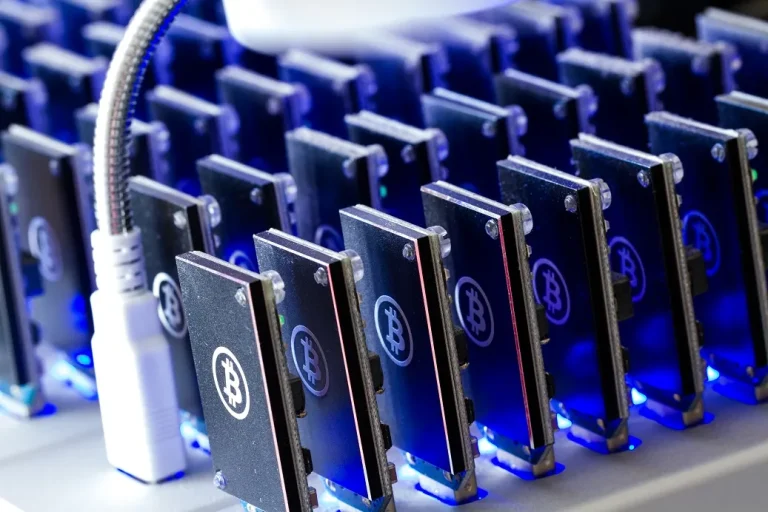
In 2026, free Bitcoin mining continues to draw beginners as traditional methods remain cost-prohibitive. Cloud mining platforms like AngelBTC offer a gateway with no upfront investment, leveraging sign-up bonuses and trial hash power to democratize access.
AngelBTC stands out with its transparent mining plans and immediate earning potential through free hash power allocations. The platform exemplifies the shift toward user-friendly crypto adoption, though due diligence remains critical when selecting services.
Nakamoto (NAKA) Seeks Reverse Stock Split to Maintain Nasdaq Listing
Nakamoto (NAKA) has filed for shareholder approval of a reverse stock split, proposing ratios between 1-for-20 and 1-for-50. The move aims to regain compliance with Nasdaq's $1 minimum bid requirement, as the stock currently trades around $0.21—a 99% decline from its May 2025 peak.
The company recently sold approximately 5% of its bitcoin holdings, retaining 5,058 BTC. A shelf registration for ~$7 billion in future securities issuance and over 400 million shares registered for resale underscore ongoing financial maneuvering.
Reverse splits artificially inflate share prices without altering market capitalization. Nasdaq rules mandate delisting for prolonged sub-$1 trading, putting pressure on Nakamoto to execute this cosmetic adjustment promptly.
Cryptocurrencies Rebound Amid US Inflation Data and Middle East Ceasefire
Bitcoin surged past $72,000 ahead of key US inflation data, while altcoins mirrored the upward momentum as Middle East ceasefire negotiations held steady. Market optimism remains cautious, with analysts warning of potential volatility as talks resume this weekend.
The week opened under stagflation fears, but Wednesday's ceasefire announcement triggered a 13% Brent crude drop and recalibrated interest rate expectations. Despite oil's partial recovery to $98, lingering geopolitical risks and softening US growth indicators keep markets on edge.
Bitcoin Consolidates Near $72K as Geopolitical Tensions and US Data Drive Market Uncertainty
Bitcoin's price action remains range-bound between $63,000 and $75,000 as traders await decisive macroeconomic catalysts. The cryptocurrency's recent 7% rally stalled near the $72,000 resistance level, with technical indicators suggesting an impending volatility expansion. Bollinger Band contraction typically precedes significant breakouts—a move above $75,000 could trigger accelerated buying.
Options markets reveal institutional positioning for upside potential while maintaining downside protection. Call options targeting $80,000 demonstrate bullish conviction, yet robust put demand reflects lingering caution. Geopolitical risks—particularly Middle East tensions—continue influencing both crypto and gold markets as alternative assets.
Long-term optimism persists despite short-term uncertainty. On-chain activity and institutional participation indicate sustained fundamental strength, though markets clearly await clearer signals from upcoming US inflation data and Federal Reserve policy guidance.
Polymarket Signals Bearish Bitcoin Outlook for 2026
Polymarket prediction markets indicate growing skepticism toward Bitcoin's price trajectory in 2026. Traders currently assign a 67% probability that BTC will remain below $55,000, with a 43% chance of it falling under $45,000. These odds reflect mounting macro uncertainties and weakening momentum following recent volatility.
Historical cycle behavior appears to weigh heavily on sentiment, with participants mapping potential bottom zones between $38,000 and $60,000. The data suggests deepening divisions among market observers—some see this as a temporary correction while others anticipate a more prolonged downturn.
Bitcoin Bear Market Nears Final Phase as On-Chain Metrics Signal Potential Turnaround
Bitcoin's prolonged bear market may be entering its final stages, according to two critical on-chain signals. Long-term holders are now spending coins at a loss—a pattern historically observed at bear market bottoms—while exchange deposits hit a decade-low. These converging metrics suggest capitulation may be nearing completion.
The LTH SOPR metric, currently at 0.96 on its 30-day moving average, confirms long-term investors are realizing losses. "When LTHs begin to sustain losses, it becomes a signal worth monitoring for accumulation," observes CryptoQuant's Darkfost. This transition from short-term to long-term holder stress typically precedes cyclical turns.
Meanwhile, exchange inflows have dwindled to their lowest levels since 2013, indicating dwindling sell pressure. The combination of exhausted long-term holders and minimal exchange deposits creates conditions reminiscent of previous cycle bottoms. While the process could extend for months, these metrics suggest the market is approaching maximum pain.
StarkWare Unveils Quantum-Safe Bitcoin Solution Without Protocol Changes
StarkWare has developed a novel approach to safeguard Bitcoin against quantum computing threats, leveraging existing protocol rules without requiring forks or upgrades. The solution replaces elliptic curve digital signatures (ECDSA) with a hash-based security model, circumventing vulnerabilities to Shor's algorithm while maintaining compatibility with Bitcoin's current scripting system.
The quantum-resistant framework operates within Bitcoin's legacy constraints, including opcode limitations, but comes with significantly higher computational costs. StarkWare's proposal serves as a stopgap measure amid growing concerns about quantum decryption capabilities, though its GPU-intensive nature makes it impractical for routine transactions.
Bitcoin Researchers Propose Quantum-Safe Solution Amid Feasibility Debate
StarkWare researcher Avihu Levy has unveiled Quantum-Safe Bitcoin (QSB), a novel approach to shield Bitcoin transactions from future quantum computing threats. The method replaces traditional ECDSA signatures with hash-based cryptography, claiming compatibility with Bitcoin's existing protocol.
While the proposal sidesteps protocol changes, experts question its practicality due to heavy computational costs and slower transaction speeds. The debate highlights the crypto industry's growing focus on quantum resistance as quantum computing advances.
Bitcoin Emerges as Potential Neutral Asset in Iran-US Ceasefire Negotiations
Anthony Pompliano's provocative thesis—that Bitcoin could serve as a financial bridge in geopolitical standoffs—gains traction amid reports of Iran demanding a $1-per-barrel transit fee in BTC for reopening the Strait of Hormuz. The cryptocurrency's censorship-resistant properties position it as a viable alternative to dollar-based systems under sanctions.
While skeptics like Arthur Hayes question the feasibility, the proposal underscores Bitcoin's evolving role beyond speculation. Its advantages over gold (portability) and stablecoins (reduced counterparty risk) make it uniquely suited for high-stakes international settlements where trust is absent.
Market observers note that such adoption would accelerate Bitcoin's transition from risk asset to institutional utility. The Strait of Hormuz handles 20% of global oil shipments—a tangible use case that could validate crypto's geopolitical relevance.
BTC Price Predictions: 2026, 2030, 2035, 2040 Forecasts
Based on current technical patterns, market structure, and adoption trajectories, BTCC financial analyst Ava provides the following projections:
| Year | Conservative Forecast | Base Case Forecast | Bullish Forecast | Key Drivers |
|---|
| 2026 | $85,000 - $110,000 | $120,000 - $150,000 | $180,000 - $220,000 | ETF inflows, halving effects, institutional adoption |
| 2030 | $200,000 - $300,000 | $350,000 - $500,000 | $600,000 - $800,000 | Global reserve asset status, regulatory clarity |
| 2035 | $500,000 - $800,000 | $1M - $1.5M | $2M - $3M | Network effect maturity, store-of-value dominance |
| 2040 | $1M - $2M | $2.5M - $4M | $5M - $10M | Digital gold standard, demographic adoption complete |
These projections assume continued network security, no catastrophic technological failures, and gradual regulatory acceptance. The base case scenario incorporates 25-35% annualized returns, consistent with Bitcoin's historical performance during adoption S-curves. Near-term price action will be influenced by the current technical setup where Bitcoin tests resistance at $73,136, with a breakthrough potentially accelerating the timeline toward 2026 targets.




Log in to Reply
Log in to comment your thoughtsComments